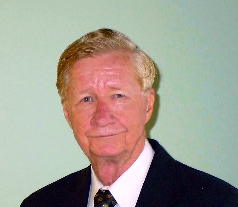
Bob came to Lafayette as an outsider — a redneck from Winnfield who fell in love with the place. He stayed for the rest of his life. He narrated its tours, documented its history, and celebrated its institutions. Nobody knew Lafayette better or loved it more.
The Lafayette Tour
Bob behind the wheel, showing visitors his city. Every restaurant, every street, every story.
On your left you will see the Old Ice House Restaurant. For much of the history of Lafayette, the building was actually an ice house...the source of refrigeration for the community. It has now been converted into a full menu restaurant, and is one of three restaurants offering gourmet cajun foods that we will be passing in the next few minutes. On your left, we are approaching Chez Pastor, and a few blocks further, on your right, Cafe Vermilionville. Cafe Vermilionville has a rich history, also. It was originally a hotel, serving the traders on Bayou Vermilion in the 1800's.
Turn left at the first traffic light and you will enter one of our older prestige subdivisions. This is Bendel Gardens. It was intended as the estate of an early resident, Henri Bendel....and the first house you see on your right was to be the overseer's home. Imagine as you will as you travel down Marguerite Boulevard that you are on the lane approaching Mr. Bendel's home, which was to be built at the point where this thoroughfare reaches the Vermilion River. Workers planted Magnolia trees along the lane to the mansion. Many of the trees still stand, but the mansion was never built. You may turn right at the last intersection, where the mansion would have stood, and the street will take you in a circle back to the entrance to the subdvision. The homes on your left are situated on the Vermilion River. Some of the finer residential construction in our community is found here in Bendel Gardens. When you arrive back at the overseer's house, turn left to exit the subdivision at the traffic light. You will turn left again at the next traffic signal, on South College Road.
For your next turn, when you leave South College Road, you will need to be in the left-hand lane. You will immediately pass the Heymann Center for the Performing Arts on your right...featuring a 3500 seat auditorium, exhibit area and banquet facilities.
Continue now in the left hand lane of South College, and as the roadway widens to accomodate two left turn lanes, move into the first one. You are turning left on West Bayou Parkway, into Greenbriar Estates, one of our more modern and more prestigious subdivisions. Please turn left when you reach King's Row and follow King's Row to Stonehenge, where you will turn right. Many of the homes you will see on our brief tour were built during the heyday of the oil industry here. Lafayette was a boom town in the late seventies and early eighties as oil prices soared astronomically. Exaggerated accounts in the national media during the boom would have lead you to believe that we were a city of millionaires who flew to Houston for dinner in our private planes, and that we all returned to homes like these in Greenbriar. It was a boom time, and millionaires were made overnight, but the national media greatly exaggerated the oil-supported opulance of the city. Still boom times are exciting times. You should now be approaching Canterbury, where you will turn right again, and travel back to West Bayou Parkway. Please turn left on West Bayou Parkway and then left again when you reach Shannon Circle. Shannon will take you through another area of Greenbriar and bring you back to West Bayou Parkway, where you will again turn left. You are now traveling back toward South College Road, and will turn right at the traffic signal. Please travel in the left hand lane, for a left turn on to Girard Park Drive. You will turn at the first left turn lane you reach.
As you turn onto Girard Park Drive, the Maurice Heyman Memorial is on your right. This is a tribute to the man referred to as "Mr. Lafayette," because of his enormous contributions to the growth and progress of Lafayette.
On your left will be Girard Park...one of the city's major recreational areas...one highly utilized by the people of our community.
If you would like to visit our Natural History Museum and Planetarium, we invite you to turn left on Auditorium Place, which you are approaching now. Signs will direct you to a visitor parking area. The Natural History Museum and Planetarium, which is also a center for environmental studies, features changing exhibits and programs on astronomy, natural history and local culture. The programs and exhibits are free to the public, and the museum and planetarium is open from 9 a.m. to 5 p.m. on weekdays, and from 1 to 5 p.m. on weekends. The planetarium presentations are held on Tuesday evenings.
The large colonial plantation style building you will see on your right at the intersecton of West St. Mary Boulevard is the Art Center for Southwest Louisiana. The facility exhibits a permanent collection of paintings by regional and international artists of the past and present, as well as temporary exhibits featuring various themes. Guided tours are available on request. Hours are 9:30 until 4:30 Monday through Friday and 2 to 5 p.m. on Sundays.
Please turn left at the next intersection, West St. Mary Boulevard and Girard Park Drive. Immediately on your left, the Heymann Home, still occupied by members of the Maurice Heymann family, sits in the midst of a carefully tended garden which decorates an entire block.
As you pass the Heymann Home, you are entering the campus of the University of Southwestern Louisiana. Founded in 1900 as an industrial institute serving local students who had completed at least the sixth grade of public school, USL is now a research university which attracts students from almost every state and over 70 foreign countries. Please observe pedestrian crossings, and please turn right on Hebrard Boulevard. On your right, you will see picturesque Lake, where students relax under moss- covered oak trees. If you would like to walk on this friendly campus, signs will direct you to visitor parking.
The Acadian Village and Gardens is a restoration of life as it was in 18th century Acadiana. It features restored Acadian- style homes, replicas of a chapel and country store typical of the time, and other reminders of the early Cajun settlements. On the ten acres surrounding it are magnificent botanical gardens. The Village is open to the public year-round from 10 a.m. to 5 p.m. There is a nominal charge. The Acadian Village and Gardens is a facility with a dual mission. Besides authentically re-creating an important part of our history, it provides financial support for the Lafayette Association for Retarded Citizens.
On your right is what is now the Lafayette Museum, but what
was once the town home of Jean Mouton, an early settler of
Southwest Louisiana, father of the first Acadian governor,
Alexandre Mouton, grandfather of General Alfred Mouton, a hero of
the confederacy during the War Between the States, and progenitor
of most of the _____________Moutons listed in the Lafayette phone
book, their families, and their relatives throughout Acadiana.
The home itself is rich in history, and on display inside are
some of the treasures of our culture and heritage. There is a
minimal fee for touring the museum. If you would like to stop
now and step back in time for a while, please turn off the tape
recorder now.
Cajun Country Tour
"Bon jour, Cher. You're in Cajun Country now and we glad you're here." — Bob as tour guide.
Bon jour, Cher. You're in Cajun Country now and we glad you're here, 'cause Cajuns love company. I guess you like to know how to recognize a Cajun if you see one while we're making this tour. Well, if you see somebody walking down the street like he owns the town...that's not a Cajun. But if you see somebody walking down the street like he don't give a doggone who owns this town...that's probably a Cajun. We're a little different. We still do a lot of things the way our French ancestors did. We got the best food in the world. My friend Elpheage says other parts of Louisiana got as good food as they deserve, 'cause they gonna put catsup all over it anyhow. It might take a while to get use to our coffee. We like it black as night, hot like the devil and sweet as love. Other children are made from snips and snails and puppy dog tails if they're boy children, and from sugar and spice and everything nice if they're little girl chil dren. Little cajun boys and girls are made from gumbo, boudin and sauce piquante, crawfish stew and oreilles de cochon. You got to taste all that while you here. But ask for crawfish, now. Don't say crayfish, because I think that's against the law in Lafayette. A good place to start this tour of Lafayette is at Gateway. That's right in the middle of the highway--what they call the median--on Interstate 167 south of I-10.
Take a look at what we got here, first. The Visitors and Conven tion Bureau is right here to greet guests, answer questions and do what they can to make this a good visit for you. While you're here, pick up a free copy of Le Guide, Acadiana's tourist maga zine. It'll tell you about all the events taking place in the area and all about the restaurants where you can get that good Cajun Cooking.
Take a look around while you're at Gateway. We tried to make this a special way to welcome people to Acadiana. We planted Azaleas, cypress trees, live oaks and camellias...and lots of native Louisiana wildflowers. And we want to showcase things our farm ers grow--like sugar cane and peppers. There's some native wildlife here, too. The pond got turtles...and a Cocodrie...that's how you say a alligator. I don't think you ought to feed him. My friend Tee Paul was cutting the grass and he got over there by that pond. He look at me and say, Hey--Robert, you think that alligator's safe. I say Tee Paul, I think he's a whole lot safer than you are right now.
You can turn off the tape recorder while you looking at Gateway, and while you're traveling, I'm gonna depreciate it if you turn it off when you see the pace ain't just right because you have to stop for a lot of red lights or you get tied up in traffic or something. You could help me by of adjusting things yourself, 'cause I can't see what you're doing and how you're driving. Now, we would like it if you stop the tape recorder and visit a while at Gateway.
Okay. How you like that Gateway? We proud of that, yeah. o73
The first stop after Gateway gonna be Vermilionville. I'm gonna give you good directions, but if you need it, there's a map of the tour on the inside flap of the box this tape came in. Lot of the turns you gonna make are at traffic signals, so that'll help you look for street signs.
We gonna travel south on Evangeline Thruway--that's the same as Interstate 49--for 2 1/2 miles...then we gonna turn on to Surrey Street. That's Surrey--just like you're grampa used to ride in when he come courtin' your gramma. Surrey is where you turn to the Lafayette Regional Airport, so look for the airport sign and turn left where it tell you to.
While we driving to Vermilionville, I'm gonna tell you a little bit about us Cajuns. We come here from Acadie in Nova Scotia--that's why we called Acadians. It was a French settle ment in a beautiful spot on the Bay of Fundy. But when the British took it over, they finally ran our ancestors out of there in 1755 because we didn't want to fight the Indians--they were our good friends. And we were raised Catholic, and didn't want to change to the Church of England. And besides that, we had the best real estate in Canada, and the British wanted that.
Mr. Longfellow told about how hard it was on us in his poem "Evangeline." Sometimes this is called Evangeline Country be cause of that. Anyhow, 4000 Cajuns came to Louisiana between 1755 and 1765. And we raised big families, yeah. Today, we are the largest French-speaking minority in the United States.
Cajuns today are like other Americans. Doctors, lawyers, teach ers, architects, engineers, merchants, farmers--same like every where. But somethings didn't change over the year. We try to keep the French language alive. And we didn't give up our forefa ther's joie de vivre...the joy of life. We work hard, but when the day's work is over, laissez les bontempts rouller. Let the good times roll. We like to sing and dance and celebrate. I hope you can come to festival. Cher, we got festivals to cele brate the crawfish season, the harvest season for sweet potatoes, sugar cane, rice, cotton. We celebrate Cajun food like boudin, jambalaya, gumbo. Just about every acadiana town is the world capitol of something--crawfish capitol, frog capitol, yam capi tol, rice capitol, shrimp capitol.
I think you figured it out now. We like to eat--and our food is so good we got to celebrate it. And we like to celebrate with music and dancing. Our music is different, too. You might have to get use to it like our coffee. But once you visit a Cajun restaurant, taste that Cajun food, and then swing your partner to a Cajun two-step...you gonna understand the spirit of Acadiana, and you gonna want to come back to see us.
'Course, we don't just dance and eat all the time for fun, no. We got fine golf courses and tennis courts. If you a golfer, you heard of the Hebert Brothers, Jay and Lionel that was leaders on o73 the PGA tour. That's two Cajun boys from Lafayette.
And, of course, we got the best hunting and fishing anywhere, yeah. Louisiana is the Sportsman's Paradise, and right now, you are right at the gates to paradise.
Me, I like to fish about four mile up six mile bayou in my pi rogue...that's the kind of boat my granpere and his granpere and his granpere used in the bayous and lakes. I got a secret spot on six mile bayou where I fish. When I first found it, eight or six years ago, I marked it on the side of my pirogue. If somebody steal my pirogue, I probably never find it again.
You can stop this tape now until you turn left on Surrey Street at the airport sign.
Okay, cher. We almost to Vermilionville. As you turn on Surrey, you gonna see the operational headquarters of Petroleum Helicop ters on your right. PHI is the biggest commercial helicopter operator in the world. Ain't but two others that's bigger: the U.S. of A. military and the Soviets of Russia military.
As you travel on Surrey Street, past our regional airport, the entry to Vermilionville is a very short drive and its gonna be on your left.
As you turn into Vermilionville, the site for the Interpretive Center for the National Park Service Cajun Cultural Center is on your right. When the projectg is completed it will be operated by the National Park Service and will be an important stop for visitors.
Vermilionville, here on the Vermilion River, is a recreation of the lifestyle of this area we call Acadiana--as it was from the time the Cajuns arrived here from Nova Scotia in 1765 until about 1890, when the Cajun culture began to open to progress and change.
Vermilionville is a 22 acre entertainment and living history attraction, featuring original Cajun and Creole structures, such as the homes, shops, schools and churches of that period when my ancestors lived basically in isolation from the rest of the world, speaking little if any English--earning their living from the rich soil and the waterways of this area, and enjoying life in a fun-loving, care-free way that still typifies the lifestyle today. Here at Vermilionville, costumed guides will help you experience the living history of the Cajun Country. You'll find a variety of entertainment, including strolling musicians per forming the music of our area, story tellers, dancers and humor ists. Whenever you visit, you'll enjoy one of our special cele brations or festivals. In the folklife center, you can go back in time and see weaving, blacksmithing, pirogue building and other things done the way us Cajuns did them over a hundred years ago.
Remembering Mr. Rodey
Curtis "Crip" Rodemacher — 24 years as Trustee of Public Property, unopposed for re-election seven times.
March First was the anniversary of one of Lafayette's great
losses. On that day, 20 years ago, death ended one of the most
remarkable careers in public service in the history of Acadiana.
Curtis (Crip) Rodemacher died March 1, 1968, the day before he
would have been returned to the office of Trustee of Public
Property for an unprecedented seventh term. After 24 years, he
was unopposed for re-election.
Until recent times, Lafayette operated under the commission-
management form of government, in which only three elected
officials guided the city's destiny. As trustee of public
property, Rodemacher had full responsibility for seeing that the
energy needs of a growing city were met, that the water supply
was safe and adequate, and that the sewer and drainage system
kept pace with the increasing demands of progress.
Among those public officials who held similar
responsibilities in Louisiana, Rodemacher was looked upon as a
giant. His accomplishments were gargantuan in nature. Yet
Curtis A. Rodemacher stood only 5'3" tall, and it was the
obstacles he overcame that were gigantic.
"Mr. Rodey," as he was affectionately known to his
employees, was slighted by nature and further handicapped by
chance, yet his accomplishments were inspirational to all--
especially those with physical limitations.
Son of a German immigrant railroad worker, he was born in a
camp car, and was slightly lame at birth. He grew up with a
limp, and never reached a height that could be considered average
even in a time and place where tall people were not the norm.
Yet he grew up tough as a boot, and with an enthusiasm and zest
for life that made his slight stature and physical affliction
inconsequential.
As a youth, he herded cattle with the best of the cowboys on
the plains of Southwest Louisiana. He also delivered newspapers
on horseback, and it was while riding his route that his horse
was struck by an automobile operated by a driver under the
influence of alcohol. He was injured, but was soon back in the
saddle again. Then, while competing in a race, his horse bolted
into the path of a car.
The slight lameness at birth, aggravated by two serious
accidents, left Rodey permanently crippled. But his dynamic
spirit was unaffected by the misfortune.
He roared into high school with boundless energy and fierce
competitiveness. He pitched for the baseball team, played
forward for the basketball squad, and ran track with his crippled
leg. With one leg considerably shorter than the other, he ran
the 100-yard dash in 11 flat.
At 5' 3" tall, he could high jump 5' 7".
In 1925, Rodey became manager and star forward of an
independent basketball team called "The Lafayette Gents." He
took The Gents all over Louisiana, in '25 and '26,
leading them to 34 victories in 36 games. The Gents once
defeated 19 teams in a single tournament.
The top team from Mexico fell to the Gents, and at one time,
the Boston Celtics explored the possibility of taking Rodey's
team on.
The people of Lafayette came to love and admire this small
man with the gigantic spirit, and elected him to the crucial post
of trustee of public property in 1944. In that job, he faced the
toughest challenge yet. The war years, with their demands on
material and manpower, had left the utility system in deplorable
shape. Repairs and maintenance had been minimal. The electric
generating plant was in disrepair and incapable of maintaining
steady service. The water department was manned by employees who
had no formal training, and the water supply was inadequate for
consumption or fire protection. The sewer system was practically
inoperative.
Two years after he took office, the colossal mess Rodey had
inherited had been whipped into a paying
proposition, providing the city's general fund with $80,000 for a
desperately needed street resurfacing program. Overall
improvements in utilities operations were phenomenal.
Rodey was easily re-elected in 1948. By then, the sleepy
little bayou town was beginning to awaken to its destiny. A city
on the move needed more and better facilities. Rodey took to the
campaign trail again, using his great energy and popularity to
promote passage of Louisiana's first revenue bond issue.
Improvements financed by the $7-million bond issue allowed
Lafayette to continue its momentum.
Rodey won again in 1952. The people also supported another
bond issue which he proposed to build a 13,555 KVA generating
unit at the steam power plant--doubling the capacity of the
electric system--and to increase the capacity of the water system
another three million gallons a day. In the midst of all this,
Rodey found time to spearhead the drive to build the Jefferson
Street underpass, eliminating a major bottleneck on the city's
main artery.
Rodey won again in 1956, and this term saw the electric
capacity of the city system doubled again, and a new sewerage
disposal plant built. Confidence in "Crip" Rodemacher was the key
factor in the people's approval of an $8-million bond issue to
keep Lafayette's utility system at a level capable of sustaining
the constant growth.
By 1960, Rodey had won such a place in the hearts of the
people that his election to a sixth term of office was by the
largest margin in his political career. That period, from 1960--
through another re-election in 1964--until his death in 1968, was
probably the most demanding in Lafayette's history. This was a
time of astounding growth, and the progressive team of
Rodemacher, Mayor J. Rayburn Bertrand, and Trustee of Finance Dan
Boudreaux kept the city on track, providing the infrastructure
for development of a great city.
Curtis Rodemacher's death on the eve of his unchallenged
election to a seventh term was untimely. Yet he had lived to see
the city he loved move forward over huge obstacles from a quaint
Cajun village to a thriving metropolis. Just as this small,
crippled man had overcome every obstacle to win his place in the
sun, and in the hearts of all who knew him.
Lafayette and the Oil & Gas Industry
"The City of Lafayette was a sleepy bayou town before the oil & gas industry jump-started its growth."
LAFAYETTE AND THE OIL & GAS INDUSTRY The City of Lafayette, now a bustling pace-setter for other municipalities in Louisiana, was a sleepy bayou town before the oil & gas industry jump-started its growth. From the early fifties to the present, progress has been linked to petroleum. Entering the Twentieth Century, the town of Lafayette boasted a population of over 3,000, and proudly announced that commercial establishments existed in sufficient number and variety to serve the needs of the townspeople. For the next fifty years, the major factors influencing growth were the railroad, the state university created in 1900, and establishment of the community as the retail hub of a eight-parish (county) trade area. All this was supported by the agrarian activities of surrounding parishes and those conducted in Lafayette Parish itself. By the 50s, Lafayette had a population of 33,000 which gave it the status of city rather than town. Many business and civic leaders felt that progress had begun to slow. Great strides had been made, but there was a feeling of loss of momentum. A new catalyst for growth was needed. The petroleum industry was that catalyst. In the infancy of the petroleum industry in Louisiana, Lafayette stood watching with little opportunity to participate. Then, the need arose for more executive and administrative personnel. In the early 50s, it was concluded that the interests of the industry as a whole would be served by the establishment of a center which would encompass the offices that were scattered haphazardly between Lafayette and Lake Charles. A Lafayette entrepreneur, the late Maurice Heymann, recognized the potential and decided to establish that center. While oil was the basis for the explosive growth that was to come in Lafayette, the Heymann Oil Center was the catalyst. The oil companies quickly began to open offices there, and the immigration of oil people accelerated immensely. In his book, A History of the Development of Lafayette, Louisiana, J. Phillip Dismukes wrote, In addition to the large numbers, the Oil Center brought a particular type of person to Lafayette. Largely exploration and production supervisory personnel, they were professional people, and they brought with them the middle class values which found ready acceptance in the community. Within a few years, it became apparent that the oil patch people had brought with them things of value--like an eagerness to participate in community affairs...the ability and desire to help with projects that would make Lafayette a better place in which to live...and, as the industry grew, so did jobs that offered opportunity and reward. By the fifties oil people were sharing leadership roles in the community with native residents, working harmoniously to help the city keep pace with the growth which their own industry was inspiring. With the impetus of the oil industry, there was remarkable progress, and Lafayette awakened in the fifties to find that it was no longer a sleepy bayou town but a growing metropolitan area. The industry was creating prosperity, and the people of the industry were sharing the civic and social responsibilities of the new era The continuing influx of new residents resulted in unprecedented urban development. Meeting the needs of the increased population prompted creation of new services. There was sudden growth in real estate development and construction, transportation, public education, and commerce in general. Lafayette was transformed. It could claim the undisputed role of urban center for Southwest Louisiana. Lafayette was positioned as an administrative center for the industry when it began moving offshore. The growing offshore activity, combined with substantial development onshore, generated or enhanced a plethora of oil-related companies in such fields as transportation, specialty manufacturing, catering, fabrication and others. The growth, of course, continued to have a positive effect on housing, retail sales, air traffic, entertainment, and the economy in general. The rest is history. No single influence accounts for Lafayettes present prosperity, but without the jump-start by the oil industry almost a half-century ago, it is doubtful the city would be traveling its dynamic, upward path.
Looking at Lafayette
"Nowhere in the United States is there a city of this moderate size that offers as many varied attractions coupled with such a warmhearted, friendly, and fun-filled environment."
Welcome to Lafayette--a city whose fortunes have long been linked to those of the oil industry. Like the industry, Lafayette has survived the hard times and is once again moving forward with strength and vitality. A recent study conducted by Paine Webber showed that Lafayette achieved full recovery by the end of the Eighties, and is once again among the fastest growing American cities, and is "one of the most dynamic urban communities in the U.S." Our excellent economic health is indicative of the strong rebound of the oil industry. With oil still our major industry, Lafayette has achieved substantial diversification in recent years. Chief among them is the city's rising popularity as a leading tourist attraction. Over two million travelers from around the world visit Lafayette each year, and the booming tourist industry has created an estimated 2,000 jobs in the parish. Lafayette offers something for everyone with the best places to fish, horse racing, quaint Acadian homes, festivals, Cajun food, dancing and Cajun and Zydeco music. The list of attractions is lengthy enough to keep a person on the tourist trail for weeks.
The city of Lafayette is the "Gateway to Louisiana's Cajun/Creole Country," a lush bayou land with a culture unlike any other, It is an area that has captured the interest of the United States and much of the world. To enhance its position as an intriguing destination for travelers, Lafayette launched and completed one of the state's most ambitious landscaping projects. As a result of the Gateway project, a variety of Louisiana plant life is located at the main arteries leading into the city, offering a breathtaking visual welcome to visitors. Lafayette is also a center for education, conventions, and the cultural arts. The University of Southwestern Louisiana offers one of the nations' outstanding computer degree programs as well as many innovative approaches to manufacturing technology. And since completion of the Cajundome, and renovation of the Heymann Center for the Performing Arts, Lafayette has "arrived" as a major contender for regional, state, and national conventions and cultural events.
Gala festivals, with food, music and dancing, can be enjoyed almost every weekend throughout the year in Lafayette and the surrounding area. The uniqueness of Lafayette is represented in these festivals which promote the local community and its people, products and natural resources.
Lafayette is a prime example of why Louisiana has been called a "Sportsman's Paradise." Freshwater and saltwater fishing areas are plentiful in and around Lafayette, from the Atcha falaya Basin, the world's largest riverbottom swamp, to the Gulf of Mexico, just a short drive to the south.
The city and area offer something for everyone. The many museums and galleries support a variety of arts organizations, and Evangeline Downs provides entertainment and excitement for the horse racing fan.
Nowhere in the United States is there a city of this moderate size that offers as many varied attractions coupled with such a warmhearted, friendly, and fun-filled environment. Over the past 35 years, the growth of Lafayette, LAGCOE, and the oil industry have been synonymous. The oil industry is strong and vigorous again. Lafayette is economically robust and growing. LAGCOE '91 is a landmark show. We welcome you to a dynamic city and a great oil exposition.
Lafayette's Cajun Heritage & Music Festival
Beausoleil, Wayne Toups, Aldus Roger, Zydeco Force — the festival of festivals at Acadian Village.
LAFAYETTE'S CAJUN HERITAGE & MUSIC FESTIVAL SCHEDULED OCTOBER 11-13 AT ACADIAN VILLAGE
LAFAYETTE--(Special to the Advocate Fun Section)--This year's Cajun Heritage & Music Festival at Lafayette's Acadian Village has been chosen as one of the top 20 events in the Southeastern United States for the month of October. The Southeast Tourism Society, a non-profit group organized by the private sector tourism industry, selects and publicizes the leading tourist events in the nine Southeastern states of Alabama, Florida, Georgia, Louisiana, Mississippi, North Carolina, South Carolina, Tennessee and Virginia. The group ranked the Lafayette event number twelve in the top twenty selection, which includes such events as the South Carolina State Fair, the Tennessee Valley Old Time Fiddlers Convention, the Georgia National Fair and the Natchez Fall Pilgrimage. The festival, proceeds of which go to benefit the Alleman Center, a facility for persons with developmental disabilities, is promoted as the only South Louisiana festival depicting the total Cajun heritage and culture. Held on the grounds of Acadian Village, a recreation of an 18th century Acadian community, it features the music, food, folklore, arts & crafts, humor, dances, recreational and occupational activities of the early Cajuns of Southwest Louisiana. A festive "Concert on the Bayou" will launch the musical activities for the event. Three of Louisiana's nationally-recognized bands will perform for the concert which begins at 7 p.m. Friday, October 11 at the Village. Appearing will be Beausoleil, featuring Michael Doucet; Wayne Toups, ZydeCajun, and Mamou. "These groups have won popularity nationwide and abroad," said Festival Director Richard Doolin, "and have contributed immeasurably to the popularity of South Louisiana's Cajun and Creole music." The music will resume on Saturday morning and continue throughout the festival. The schedule for Saturday includes: 10 a.m. Aldus Roger & the Lafayette Playboys 12:30 Bobby Scott & Louisiana Vintage 3 p.m. Gene Savoie and the Bayou Ramblers 4 p.m. Zydeco Force, featuring Robbie Robinson 8 p.m. Jimmy Thibodeaux & Cajun Friends 10:30 p.m. Ann Goodly & the Zydeco Brothers Continuous music on Sunday will feature the following bands: 11:30 a.m. Joe Douglas 2 p.m. Shakerz, featuring Bob Kubelka 4:15 Rockin' Dopsie In addition to the traditional Cajun and Creole music, the festival will present gospel music on Sunday morning, including a performance by the Sons of Thunder of Abbeville at , and the Queen of Peace "A Train" Choirs at 11 a.m. The Festival will offer an exciting array of foods prepared in the unique style of South Louisiana's Cajuns and Creoles. Doc Lanier, food chairman for the event, said the eagerness of various organizations to prepare special dishes for the festival "is extremely gratifying." "In the midst of all the activities," Lanier said, "we sometimes tend to lose sight of the fact that, besides offering visitors a look at the total Cajun experience, we are also raising funds for the essential services provided by the Alleman Center. The groups participating in the food booths at the festival provide a great boost to the Alleman program, and delicious food to the festival visitors." Following is a list of organizations who will have booths at the festival, and the special dishes they will offer: St. Leo's Knights of Columbus Council: Red beans & rice and pralines Fatima Knights of Columbus Council: Shrimp Etouffe Broussard Knights of Columbus Council: Jambalaya, boudin and cracklins St. Edmonds Knights of Columbus Council: Fried Turkey Lafayette Firefighters Association: Alligator boullettes St. Basil Knights of Columbus Council: Hamburgers & hot dogs Lafayette Trail Riders: Fried Catfish Ladies' Civitan Club: Crawfish etouffe Acadiana Apartment Association: Shrimp stew Pius X Knights of Columbus Council: Chicken nuggets Hub City Kiwanis Club: Ice Cream LARC Mothers' Club: Sweets The Cajun Cuisine area will be open from Saturday morning, October 12, through Sunday evening. Among the other features of the festival will be: TRAPPERS & TRADERS: An encampment on the village grounds where trappers and traders barter goods with local townspeople. The Buckskinners, dressed in 1840s costumes demonstrate throwing the tomahawk and Bowie knife and the use of black powder rifles. WAGON TRAIN: The Acadian Trail Riders offer festival goers rides in authentic covered wagons. ARTISANS: Against the unique background of the authentic Cajun homes in the Village, visitors will see fiddle and accordion makers, broom makers, moss and mattress makers, boat builders, spinners and weavers, shingle makers, quilters, cowhide chair makers, furniture makers, soap makers and saddle makers. NATIVE AMERICANS: The closeness of Cajuns and Native Americans dating back to Nova Scotia prior to their dispersal in 1755 will be emphasized by activities including construction of palmetto house by members of the Houmas Tribe, presentations on customs and folklore by Attakapas Larry Richard, performances by the Coushatta Dance Troupe and Drums of Many Nations. Visitors will also tour the Missionary Museum of the Lower Mississippi Valley on the Village grounds. TOURNOI DE VILLE PLATTE: Visitors will be given a preview of the running of the Tournoi by riders from the Ville Platte Cotton Festival, as Knights in shining armor attempt to spear the gold ring while their horses race the tournoi course. Additionally, there will be presentations on the history of the Cajuns, readings by Clovis Crawfish Author Mary Alice Fontenot, humor by Cajun humorists Ed Roy and Ralph Begnaud, and alligator skinning. "The Cajun Heritage & Music Festival is unlike any other festival in Louisiana," according to Doolin, who is also executive director of the Alleman Center. "It is about the real Cajuns who migrated to the swamps, prairies and bayous of South Louisiana almost 300 years ago and who, until fairly recent times, were hidden away from the rest of the nation by geography. Unfolding in a rustic hamlet which is recognized as the architectural repository of the Cajun culture, it tells the story of these unique people from almost every angle, including their remarkable zest for living."
Golden China Restaurant
"There are three groups of you out there that I need to talk to..." — Bob selling Lafayette one restaurant at a time.
GOLDEN CHINA RESTAURANT 60 SECONDS "Trying It"
There are three groups of you out there that I need to talk to: First, those of you who have never tried Chinese food, and don't know whether you like it or not. Second, those of you who like Chinese food but haven't tried the very best at Golden China on Congress St. in Lafayette. And third, those of you who have tried Golden China...know its the best in Acadiana but, because of some change in your daily routine, haven't enjoyed it for a long time. If you haven't tried Chinese food, you need to. You'll like it. If you like it but haven't tried Golden China...do it. You're missing something special. If you know Golden China has the best Chinese food in Acadiana but just haven't managed to enjoy it lately...come on back. Be good to yourself. You deserve it. Bob & Linda Mashburn add a touch of the culinary style of Acadiana to the traditional Chinese recipes--and the result is too good for me to try to describe. Golden China...delicious food...pleasant atmosphere...a wide choice--in food and prices. Golden China...a delightful place to dine...on Congress two miles west of the Cajun Dome. BROADCAST COPY Bob Hamm 205 Laurence Lafayette, LA 70503 (318) 233-5744
The Restaurants of Acadiana
"Acadiana is a Mecca for gourmets. There is just no food quite like Cajun food."
Enola Prudhommes Cajun Cafe on the Evangeline Thruway at Carencro has twice been voted the best Cajun restaurant outside of New Orleans. We think its the best Cajun restaurant anywhere. The magic begins with unique recipes, special seasonings and perfect cooking. Add to that a wonderful atmosphere in a beautiful old home built in the 1800s -- and top it off with perfect service by members of Enola Prudhommes Family. The result is a diners delight, unmatched anywhere. Enola Prudhommes Cajun Cafe is convenient, too: on N.E. Evangeline Thruway (I-49) in Carencro, just seven miles north of I-10 and three miles north of Evangeline Downs. Enola also offers low calorie Cajun meals. Whatever youre hungry for, youll find it at Enola Prudhommes Cajun Cafe. Its award winning Cajun cooking, served by in a family tradition that is famous world-wide. For the very best Cajun Cooking served anywhere, head for Enola Prudhommes Cajun cafe, and a dining experience youll never forget.
Prudhommes Cafe 60 seconds Diners Delight
Acadiana is a Mecca for gourmets. There is just no food quite like Cajun food. And of all the fine Cajun restaurants around, one stands out above the rest. Enola Prudhommes Cajun Cafe on I-49 in Carencro is the choice of people who really want the total Cajun experience. Everything is Cajun style from the wonderful Enola Prudhomme recipes to the warm, friendly service by members of her family. The food is Cajun cooking at its best, and the happy, neighborly atmosphere is typical Cajun also. The menu is a full one. Whatever youre hungry for, you can find it at Enola Prudhommes Cajun Cafe. Theres a delicious daily lunch for only $6.95...and the regular menu, with many of Enolas award-winning dishes, ranges from $9.95 to $17.95. Its the best Cajun food, at truly reasonable prices. Also, Enola pioneered low calorie Cajun cooking, and you can enjoy it every day in her wonderful restaurant. Try it soon. Enola Prudhommes Cajun Cafe on N.E. Evangeline Thruway (I-49) just seven miles north of Lafayette and three miles north of the race track.
Dillards 60 Seconds Calphalon
Nothing in the world is quite is good as home-style Cajun cooking, Whatever Cajun delight youre planning for your family, Dillards has the perfect pot for you from the Calphalon selection. Youll prepare fine meals with this great cookware for many years to come, because Calphalon cookware is designed to last for a lifetime. You can purchase just the pieces you need...with each piece individually priced from $20 to $145. Each piece features Calphalons Professional Nonstick -- the most advanced nonstick surface available in cookware. Each pan goes through a special process that makes it 30 percent harder than stainless steel. The Calphalon line is designed for superior cooking performance, easy cleaning and maintenance, and a lifetime of service. In fact, you get a lifetime warranty. Choose the Calphalon pots and pans you need from the housewares department on the second floor of Dillards Acadiana in Acadiana Mall -- where good cooking begins.
Dillards 60 seconds Housewares
For the perfect Cajun meal, combine your recipes and cooking skill with Dillards fine housewares. The Calphalon selection of pots and pans have the most advanced non-stick surface made, theyre stronger than steel, and theyre designed to last a lifetime. Each piece is individually priced at Dillards from $20 to $145, with a lifetime warranty. While youre at Dillards pick up the other houseware items you need for perfect dining at your home. Youll find things like porcelain soup bowls priced at just $10 each. The unique bowls carry recipes for turtle soup, alligator gumbo, creole gumbo, and crawfish bisque. Get the entire set. Theyre stackable for easy storage. The housewares department on the second floor of Dillards Acadiana is the only place you need to shop for quality kitchen utensils. Be sure to see the Calphalon line of pots and pans and all the other wonderful items at Dillards Acadiana -- the starting place for fine Cajun cooking, located in Acadiana Mall. Lourdes 60 Seconds Mission
With all the advances made during its years of service to the people of Acadiana, the mission of Our Lady of Lourdes Regional Medical center remains the same. In 1949, the hospital was established by the Franciscan Missionaries of Our Lady to extend the healing ministry of Jesus Christ. The quality of Lourdes services and the caring nature of Lourdes people reflect the continued dedication to that sacred mission. While fulfilling that mission, Lourdes continues to improve its abilities to meet the medical needs of Acadiana. A recent growth period at the hospital ushered in an era in health care delivery geared to increased efficiency, and greater convenience for the patient. It will also address another major goal of Lourdes: to continually develop new ways to make health care more economical. Our Lady of Lourdes Regional Medical Center offers the most advanced medical skills and technology available, delivered in a way that is more convenient and economical for the patient. Lourdes is a unique hospital, with a sacred mission.
Lourdes 60 Seconds Service
Today, with patients concerned about getting the best quality treatment in as short a time span as possible, Our Lady of Lourdes Regional Medical Center focuses on an environment where every component has meaning in the treatment process, and services are centralized and progressive. This means a patient doesnt go to one part of the building to be admitted, then move through a variety of different areas for different kinds of diagnostic work, and go to still another area for surgery or other procedures. Lourdes has streamlined the total hospital experience, and that means quicker access to services, shorter stays for patients, and more cost- effective care. With these and all its other advances, the mission of Our Lady of Lourdes Regional Medical center remains the same. In 1949, the hospital was established by the Franciscan Missionaries of Our Lady to extend the healing ministry of Jesus Christ. The quality of Lourdes services and the caring nature of Lourdes people reflect the continued dedication to that sacred mission.
Noel Acadien Au Village
A Cajun Christmas at Acadian Village — Festival of Lights, animated scenes, and the true meaning of Christmas.
NOEL ACADIEN AU VILLAGE (A Cajun Christmas at the Village) November 28-December 13 Acadian Village 303 New Hope Road Lafayette, LA Noel Acadien Au Village, the annual Christmas celebration at Acadiana Village November 28-December 13, is unique in many ways, not the least of which is its colorful setting. Acadian Village is considered to be the architectural repository of the Acadian heritage. With it's charm and authenticity, it offers a special attraction for visitors at any season. At Christmas time, however, the Noel Acadien Au Village celebration transforms the facility into a Yule Tide wonderland. Underlying the presentation of the Christmas entertainment and other attractions is a special cause which is in keeping with the spirit of the season. Proceeds from Noel Acadien Au Village go to support the Lafayette Association for Retarded Citizens in its operation of the Alleman Center. Among the highlights of this year's celebration will be a Festival of Lights, animated Christmas scenes, Christmas music and dance, and the presence of Santa Claus throughout the celebration. Herbert Abdalla, honorary chairman, says the focus of the observance will be on the true meaning of Christmas, and that the many activities will highlight the story of the Holy Birth. One of the featured performances will be a presentation of "The Gift," a Christmas musical by the Opelousas Community Choir under the direction of Mrs. Judith Tidwell. Performed by amateur and professional musicians from Opelousas and the surrounding area, the presentation offers beautiful Christmas music as well as drama, according to Abdalla. Among other performances scheduled are Lisa's School of Dance, the June Montgomery School of Dance, Vocalist Nancy Marcantel, and musicians Bobby Scott and Gordon Wiltz. The elaborate lighting displays," Abdalla said, "will depict Santa in a reindeer-powered buggy, a snowman on a ski slope, angels, toy soldiers, reindeer, Doves of Peace, a moving carousel. and other scenes of the season. People who have visited Natchitoches for the Festival of Lights have seen the beauty that can be created. Our designers will achieve this same artistry." Another major attraction, Abdalla said, is a series of life-sized, animated Christmas scenes, such as the Nativity Scene and Santa's Workshop. "These moving displays represent much of the beauty and color of the wonderful Christmas pageant which was presented for so many years through the concern and generosity of the Junior League of Lafayette", he said. "After deciding that they could no longer sustain both the Christmas observance and the many other community projects which they sponsor, the League made the animated scenes and other features of their celebration available to the Lafayette Association for Retarded Citizens for incorporation into Noel Acadien Au Village. This joining of the exciting features of the two observances promises to be the most appealing Christmas celebration Lafayette has ever known." Abdalla will preside over the opening of Noel Acadien Au Village on November 28, after which the program will run through December 13, from 6-8 p.m. weekdays and 5:30-8 p.m. Saturdays and Sundays. "It will be a wonderful occasion for the family, at possibly the most unique setting in the country for a celebration of the Christmas Season," Abdalla said. Further information may be obtained by writing Noel Acadien Au Village, 303 New Hope Road, Lafayette, LA 70506, or by calling (318) 984-6110.
CUTLINES WITH NOEL ACADIAN AU VILLAGE STORY
Among the performers scheduled to appear at Acadian Village November 28-December 13 during Noel Acadien Au Village are Lisa's School of Dance Crawfish Strutters. They will perform a ballet dance to "Happy Christmas," tap dances to "Boogie Woogie Christmas" and "Rocking Winter Wonderland," a Christmas jazz dance to "Jingle Bell Rock," and a baton twirling dance to "Rocking Around the Christmas Tree." The group also promises a "Christmas surprise."